
Skip to content

A green AI lab

Electricity, timed right

Every kilowatt-hour has a better hour.

Your car, your heating and your hot water switch on when electricity is cheapest and cleanest.

You change nothing.

Your bill goes down.

An ordinary evening

01 / 07

01

Everyone gets home.

Cars plug in, heating comes on, showers run. Thousands of homes, the same hour.

02

Demand peaks.

To cover the top of the curve, the grid starts its most expensive and most polluting plants.

03

Our layer sees the day ahead.

Tomorrow's prices and pollution, hour by hour, and what each home has asked for.

04

Flexible loads let go of the peak.

The car, the water tank and the heating do not need this exact hour. They need a deadline.

05

They travel to better hours.

Cheaper, cleaner, quieter. The same energy, drawn when the grid has room.

06

The peak comes down.

Fewer emergency plants started. Less paid for the most expensive hour of the day.

07

Every deadline is still met.

Warm by eight. Hot water in the morning. Car charged before you leave.

EVENING PEAK

The demand curve is an illustration. Prices: ENTSO-E Transparency Platform · fetched just now.

What we do

Electricity costs more at some hours than others. Most homes ignore that.

The price changes every hour of the day, and so does how much pollution it causes. Charging a car at three in the morning instead of seven in the evening can cost half as much and pollute far less. Nobody wants to stay up to plug things in, so we do the timing for you.

  • A smaller bill

    Same comfort, same habits, same warm flat. We only change the moments when your appliances draw power.

  • A cleaner footprint

    When everyone uses power at once, gas plants fire up to keep the lights on. Using power at quieter hours means less of that.

  • A steadier grid

    Thousands of homes shifting together means fewer emergency power stations. Energy companies pay for that, which is how we keep the price low for you.

Three steps, and you only do the first two once.

  1. 01

    Connect your devices

    Your heat pump, electric car, water tank or home battery link up in a couple of taps. Most major brands are supported.

  2. 02

    Say what you need

    In plain words: “home by eight, hot shower at half six.” No timetables to fill in, no settings to learn.

  3. 03

    We handle the timing

    Every hour we look at tomorrow's prices and pollution, then run your devices at the best moments that still meet what you asked for.

Try it

You get home at eight. The flat is already warm.

Choose when you need something done. Watch us find the best hours for it, using today's real prices.

What do you need
20:00
Price
Pollution

The gold block is when we would run it. The dotted outline is when an ordinary timer would have.

PriceEUR/MWh
PollutiongCO₂eq/kWh

ENTSO-E Transparency Platform · fetched just now

Our plan

Run it from 15:00 to 18:00

12.0 kWh over 3 h, done by 20:00.

Price
€3.67
−€0.16 (4%)
Pollution
2.91 kg
−1.83 kg (39%)

Compared with starting at the last possible moment, which is what a well-set timer does. We can start up to 6 hours earlier. Beyond that, the head start stops being worth it.

How we work this out

We look at every possible start time that still finishes when you need it. For each one we add up what the electricity would cost and how much pollution it would cause. The slider decides which of the two matters more. The cheapest combination wins.

The real product goes further than this page can show: it knows how fast your home loses heat, it learns your week, and it reads what you say instead of asking you to fill in a form.

Technology

The language model never touches the switch.

A sentence becomes explicit constraints. A deterministic optimiser makes every scheduling decision inside them, and every command is checked before it goes out.

  1. 01

    Human intent

    “Home by eight.” A sentence, a calendar entry, a habit.

  2. 02Small and bounded

    Constraint extraction

    The language model turns it into explicit, bounded fields. This is all it does.

  3. 03

    Explicit constraints

    A deadline, a duration, a comfort floor, a hard exclusion. Readable by a person, checkable by a machine.

  4. 04The structural centre

    Deterministic optimiser

    The same window arithmetic as the demo, plus a thermal model and learned occupancy. No model in the loop.

  5. 05

    Device orchestration

    Commands go out through the manufacturers' interfaces, one home at a time.

  6. 06

    Verification and fallback

    Every command is checked against the constraints. If they cannot be met, the device runs as it would have without us.

Try a sentence

Explicit constraints

device
Heating
deadline
20:00
duration
3 h
comfort_floor
19 °C
hard_exclusion
none

Example parses, written by hand. No language model runs on this page. The optimiser does, on the data shown across this site.

Optimiser output

Deterministic optimiser

Chosen window

15:00 to 18:00

Price
€3.67
Pollution
2.91 kg

ENTSO-E Transparency Platform · fetched just now

A green power station

1 homeIllustration

01

One home.

A car, a heat pump, a water tank, a battery. Each can wait an hour or two without anyone noticing.

02

Ten. A hundred.

Every home on the street has some of them. Every street in the city.

03

Thousands, moving together.

Each home keeps its own deadlines. Only the timing is shared.

04

One coordinated system.

A reservoir the size of a power station, already installed and already paid for.

The battery already exists.

Millions of homes, acting like one enormous battery.

A battery big enough to steady a country costs hundreds of millions and takes five years to build. The water tanks, car batteries and heat pumps already sitting in people's homes add up to far more than that. Nothing needs to be built. It only needs to be timed.

Our promise

These are figures our model projects, not results we have measured

−20%
Off a household bill
For a home with a heat pump and an electric car on an hourly tariff.
−30%
Off peak demand
Across a whole portfolio of homes, not one connection.
+10 to 15%
Supplier margin
From buying less power at peak prices and forecasting demand better.
€25bn
Market within reach by 2030
Annual savings pool of roughly 93 million homes served by the leading suppliers of the sixteen countries below.

These are figures our model projects, not results we have measured. No pilot has produced them yet.

How we count carbon

How the market figure is built

The figure is not revenue. It is the yearly electricity saving available to households once their supplier is signed, taken as 20 % of the bill. In 2028 the base is the three leading suppliers in the ten hourly-pricing countries, about 43 million homes and €13.5 bn a year. From 2029 it also covers the two leading suppliers in France, Italy and Portugal, about 93 million homes and €25 bn a year in total. On that base we assume an average adoption among each signed supplier's customers of 10 % in 2028, 25 % in 2029 and 45 % in 2030.

  1. 2028Leaders of the ten hourly-pricing countriesAdoption10 %Homes on the platform≈ 4 millionSavings in play≈ €1.4 bn / yr
  2. 2029Leaders of all sixteen countriesAdoption25 %Homes on the platform≈ 23 millionSavings in play≈ €6 bn / yr
  3. 2030A majority of suppliers in each countryAdoption45 %Homes on the platform≈ 42 millionSavings in play≈ €11 bn / yr

Adoption rates and signing dates are planning assumptions, not commitments. Household counts and bills come from our own market sizing and have not been audited.

The market

Everything is plugging in. And no two hours are worth the same any more.

In ten years, Europe is electrifying its cars, its heating and its hot water. At the same time, the price and the carbon of electricity start to move from hour to hour. Two movements rising together, and a market is born where they cross.

×2
Target share of electricity in the EU's final energy: 23% today, 46% in 2040
×8.7
Share of fully electric cars in new EU sales, since 2019
573 h
Hours at a negative price on the German market in 2025, against 69 in 2022

Charts seen: 0 of 8. The rest of the page opens at the last one.

Where we are going

Sixteen countries, starting where it pays off fastest.

Some countries already let households pay a different price each hour. That is where we start, because the savings are immediate and nothing has to change first. The rest follow as their tariffs open up.

Home market

First wave

Hourly pricing already in place.

Second wave

Fixed day and night rates, for now.

What it costs

One price per home, set market by market.

A household pays one monthly subscription, priced for the country it is in. What a home saves on its bill differs from market to market, and so does what it pays for the service. Companies and industrial sites are quoted instead: their loads, their contracts and their constraints are their own.

Norway

€7

per month · per home

Unlimited devices

Average household bill
€1,630 a year
What we aim to save
€326 a year
What the subscription costs
€84 a year
What we aim to save
What the subscription costs

An aim on 20 % of the bill, not a measurement: the same share the impact panel states.

Go straight to a market

Businesses

On quote

Offices, shops, fleets and buildings: the loads are larger, the contracts are negotiated, and the saving depends on the meter. Priced on what we find there.

Industrial sites

On quote

Process loads, on-site generation and grid-service revenue change the arithmetic entirely. Quoted per site, once we have seen the load curve.

Talk to us

Agail business plan · 2026-09-16

Why it scales

The more the price moves, the more there is to save. And it moves almost everywhere.

A home's electricity tariff comes in three shapes. The software is the same under all three; what changes is what a good hour is worth. Here is what each shape lets us do, and why a country that opens up hourly pricing gains overnight, with nothing new to install.

Dynamic price

hours chosen on price

A sketch, not a measurement

Up to 96 prices a day, known the evening before.

The cheapest hour can cost a fraction of the dearest, and the two are rarely next to each other. We place each appliance on the exact hours that pay, every day, as the shape of the day changes. Since October 2025 the European market sets a price for every quarter of an hour; the first suppliers already pass it on to homes as it is, and an appliance settles on a quarter-hour as readily as on an hour.

The full potential. The 20 % aim stated above is for a home on this tariff.

European day-ahead coupling (SDAC) at 15-minute resolution since 1 October 2025.

Where it already exists

  • NO
  • FI
  • SE
  • DK
  • CH
  • BE
  • NL
  • ES
  • DE
  • AT

Peak / off-peak

hours chosen on price

A sketch, not a measurement

Two prices a day, fixed for the year.

Coarser, but real: everything that can wait moves into the cheap hours and stays out of the dear ones. Meanwhile the CO₂ of each hour still varies, and we keep choosing on it. The day hourly pricing arrives, the same appliances start saving more, with nothing to change at home.

A smaller saving today; we will publish a figure once it has been measured.

Any home with a smart meter can ask a supplier with more than 200,000 customers for a dynamic-price contract. Directive (EU) 2019/944, art. 11, June 2019.

Where we start this way

  • FR
  • IT
  • PT
  • PL
  • HR
  • RO

One price

hours chosen on CO₂

A sketch, not a measurement

The same price all day.

The price says nothing. The pollution still does: the CO₂ of a kilowatt-hour changes hour by hour in every European country, whatever the tariff. And a grid still pays for homes that shift together.

Cleaner, not cheaper. None of our sixteen markets is here; it is not where we start.

One piece of software, sixteen countries.

  1. 01

    One price signal for the whole of Europe

    Tomorrow's prices are published the day before, down to the quarter-hour, for every country in the coupled European market: one source, the one this site already reads.

  2. 02

    A tariff is a grid of 24 or 96 cells

    On hourly pricing there are twenty-four, all different; at the quarter-hour, ninety-six. On peak / off-peak there are two values, repeated. The finer the grid, the more hours there are to choose; the optimiser reads the grid, and needs to know neither which country it is in nor how many cells it has.

  3. 03

    CO₂ moves by the hour everywhere

    The second signal depends on no tariff at all. Where the price is silent, it still says which hours are clean.

A country that switches to hourly pricing has nothing more to install. The next day, the same appliances save more.

The 20 % aim is for a home on hourly pricing with a heat pump and an electric car. On peak / off-peak the saving is smaller, and we will not print a figure until it has been measured.

And beyond Europe

These three shapes are the only ones a tariff can take, and they exist on every continent. Markets with a price that moves through the day run in North America, Australia, Japan and India as they do here, and the CO₂ of a kilowatt-hour is measured hour by hour almost everywhere. What is written here for sixteen countries holds for any other: adding a country is adding a line to a table, not building anything. The solution applies in every country in the world.

Europe is our first continent. Next, we are aiming for the Americas, Africa and Asia.

Our advantage

And when there are millions of us?

Optimising one home is a service. Optimising millions of them is a responsibility towards the market.

So that our solution benefits everyone

Here is the sector's blind spot: if millions of homes receive the same signal and react the same way, the cheapest hour becomes the new peak. The tool meant to relieve the grid ends up destabilising it, and turns prices against its own users. Today's approaches, which optimise each home in isolation with the same logic, will all run into that wall.

Agail is built for scale from day one. Our control engine orchestrates the fleet as a whole: every home keeps its savings, without the sum of those optimisations ever putting the market or the grid under strain. That is what makes us an ally to suppliers, not a threat.

The moment

Green IT 3.0

Three waves are crossing, and they will cross once. Every figure below carries its source and its date: check them.

  1. $407bn

    invested in AI in the first half of 2026

    AI is drawing in the world's capital.

    Artificial intelligence took $407 billion in the first half of 2026, more than in the whole of 2025. In the first quarter it accounted for 80 % of all venture capital worldwide, against 55 % a year earlier.

    OpenAI and Anthropic alone took more than half of it. The world has decided: AI is the technology of the decade.

    PitchBook, H1 2026 · Crunchbase, Q1 2026

  2. 945 TWh

    what data centres will draw in 2030

    And AI has just hit a wall: energy.

    The International Energy Agency expects data centre electricity consumption to double by 2030, reaching slightly more than the whole of Japan's.

    Microsoft, Google, Amazon and Meta have already contracted more than 10 GW of nuclear power to run their models. Electricity has become the scarce resource of the AI era.

    IEA, Energy and AI, April 2025 · public contracts 2024-2026

  3. €1bn

    the valuation of Europe's first home-energy optimiser

    And managed energy is already making unicorns.

    Europe is now the leading continent for climate tech venture capital. Germany's 1KOMMA5°, which runs households' energy in software, has been a unicorn since 2023 and goes public in 2026, the category's first exit.

    Google has just picked 28 startups working where AI meets the electricity grid. The category is only starting.

    PitchBook · Renewables Now · Google, 2026

  4. This is where we stand.

    Green IT 1.0 cut the footprint of computers. 2.0 optimised the cloud. 3.0 turns the question around: artificial intelligence put to work on the energy of the real world.

    When electricity becomes scarce, every hour of flexibility gains value. Everywhere, not only in data centres. A home that moves its consumption is worth whatever the grid is straining by at that moment.

    Agail sits at the exact intersection of the three waves: AI as the brain, energy as the market, and millions of already-installed appliances as the asset.

The giants are buying power stations. We are programming homes. Without building anything.

Investors

We are raising to take this moment.

Every kilowatt-hour has a better hour. So does this round.

  • The deployment plan, country by country
  • The assumptions behind every figure
  • The full deck

Leave us your details: we answer every request, within days.

Energy suppliers

Your hourly tariff deserves customers who use it.

A partnership, not one more piece of software.

  • A pilot on part of your base
  • Your customers save, and so does your margin
  • A fleet steered as a whole, never all at the same hour

Tell us who you are and what you have in mind: we answer every request, within a few days.

Events

Two dates, in November 2026.

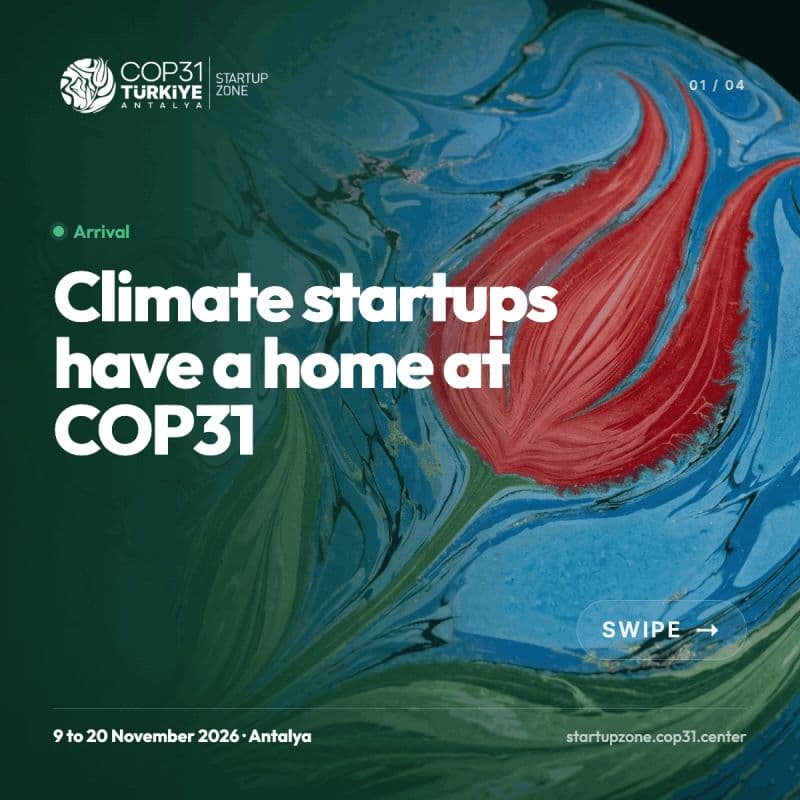
We will be in the COP31 startup zone, in Antalya, and at Web Summit, in Lisbon. Come and see us.

The poster for COP31

COP31

Startup Zone

9 to 20 November 2026 · Antalya

Climate startups have a home at COP31. We are presenting Agail there.

The poster for Web Summit

Web Summit

Startups

9 to 12 November 2026 · Lisbon

The world's technology conference. We are meeting investors and energy suppliers there.

Who we are

Four people building it.

A small team that builds, sells and deploys, with a partner who has built and sold in this market before.

  • Adam Larbi

    Chairman and chief executive

    Co-founder

    Vision, strategy, partnerships and the shape of the offer. Leads sales and operations.

  • Nathan Serfaty

    Chief technology officer

    Co-founder

    Architecture, infrastructure, machine learning and leadership of the development teams. Master's in data and artificial intelligence, École Polytechnique and HEC Paris.

  • Pierre Duchesne

    Chief product officer

    Co-founder

    Owns the product roadmap and the user experience. Deep expertise in the energy sector.

  • Maxime Labbé

    Partner

    Co-founder and managing director of Intuity, partnering with Agail on the software's cybersecurity. Market access and strategy.